
Home/Sports Rehabilitation
Sports Rehabilitation
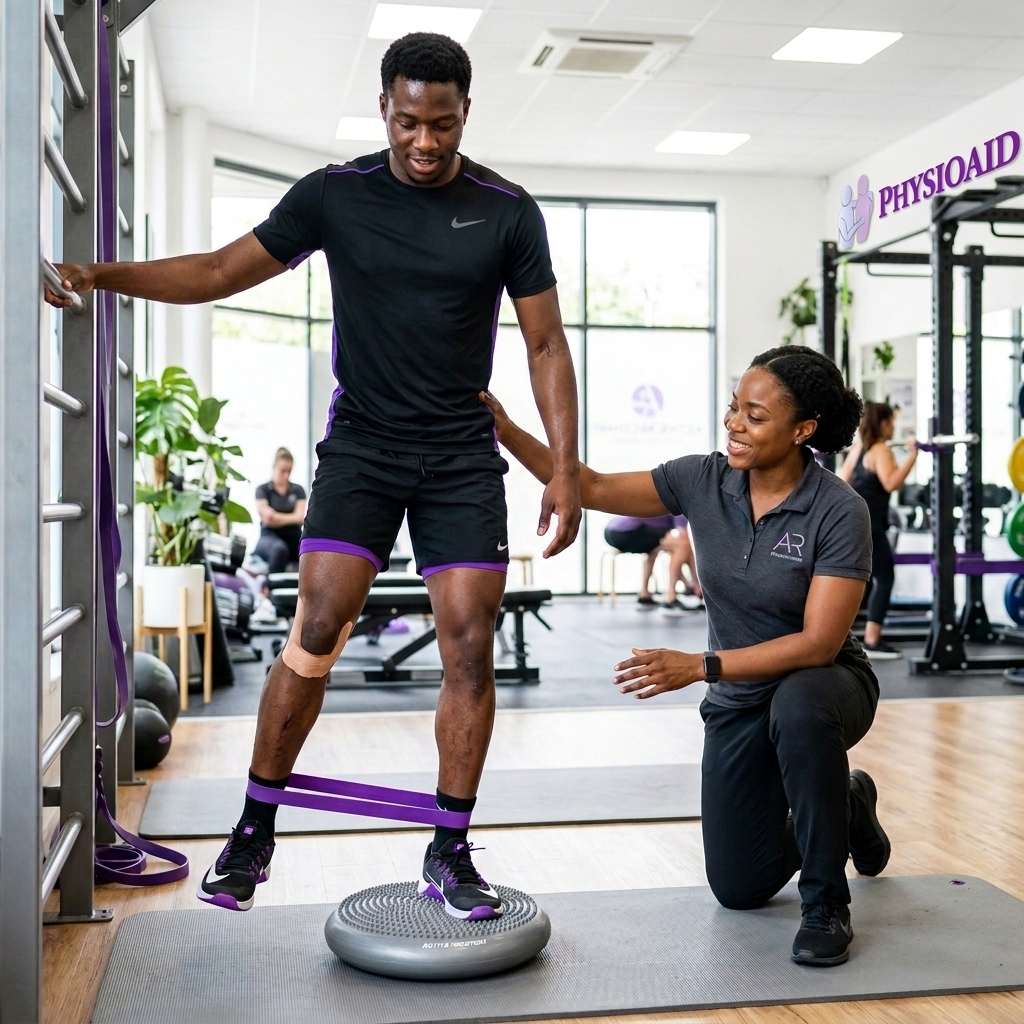
Whether you’re a professional athlete, weekend runner, gym enthusiast, or simply enjoy an active lifestyle, injuries can disrupt your performance and daily routine. At PhysioAid, our Sports Rehabilitation service is designed to help you recover safely, regain strength, and return to your sport or activity with confidence. Using evidence-based physiotherapy techniques, we create personalized rehabilitation programs that not only treat your current injury but also reduce the risk of future setbacks.
Who Can Benefit?
- Professional and amateur athletes
- Fitness enthusiasts and gym-goers
- Runners and cyclists
- Football, basketball, and tennis players
- Individuals recovering from sports-related injuries
- Anyone looking to improve physical performance and prevent injuries
Some Conditions We Treat
- Ankle sprains and instability
- ACL, MCL, and other ligament injuries
- Muscle strains and tears
- Rotator cuff injuries
- Tennis elbow and golfer's elbow
- Post-operative sports rehabilitation
Our Treatment Approach
Every athlete and active individual has unique recovery goals. We begin with a comprehensive assessment to understand your injury, movement patterns, strength, flexibility, and functional limitations. Based on our findings, we develop a customized rehabilitation program that may include manual therapy, therapeutic exercises, strength and conditioning, balance and coordination training, mobility exercises, sports-specific drills, and injury prevention education. Our goal is to help you recover efficiently while restoring confidence and peak performance.
FAQs
It’s recommended to begin physiotherapy as soon as possible after your injury has been assessed. Early intervention can reduce pain, minimize swelling, and speed up your recovery while preventing long-term complications.
Yes. Sports physiotherapy isn’t only for treating injuries. It can also improve strength, flexibility, balance, movement efficiency, and overall athletic performance while reducing the likelihood of future injuries.
Not always. Your physiotherapist will advise which activities are safe to continue and which should be temporarily avoided. In many cases, modified exercises can help maintain your fitness while you recover.